Blowing Whistles


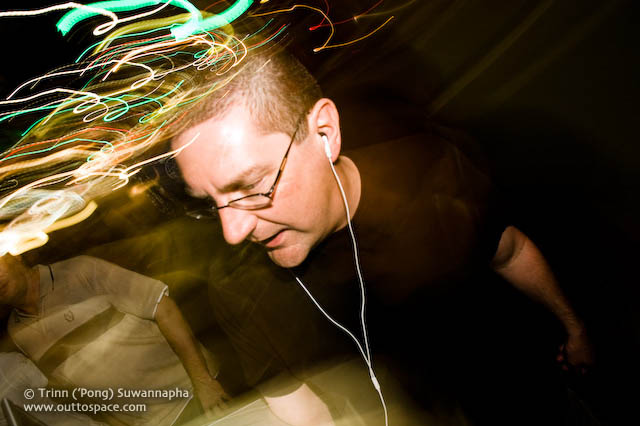
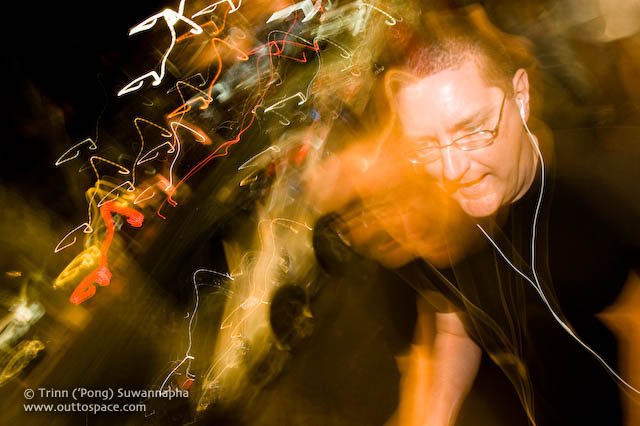
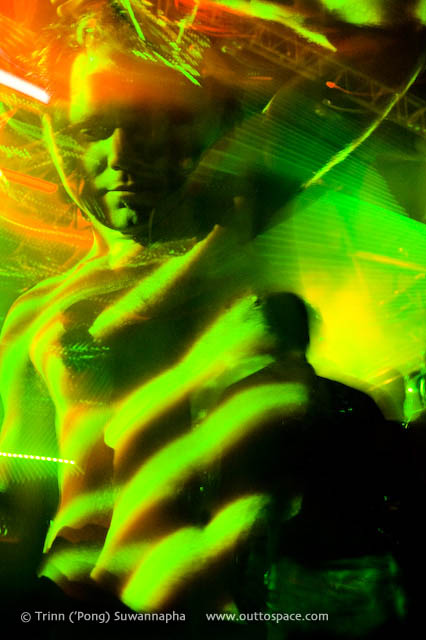
Out of the blue, I am contacted by Focus Theatre and asked for my photography of Sydney Gay & Lesbian Mardi Gras Party in their production of Blowing Whistles in Sydney, Adelaide and London. I say why not. Blowing Whistles is about contemporary gay culture. Two men is celebrating their tenth anniversary relationship on the eve of Mardi Gras and cruising for another guy online. That changes their lives forever.

I have not seen the show and am curious how my photographs are put in the show. London show is adapted for the local scene but they could not find suitable London gay party scene images for it. So they use mine which you cannot really identify specific scenes anyway. That makes me think how you put yourself into what you see and photograph.

For the past couple of years, I believe that we, a group of Flickr’s Sydney PhotoBloggers and photography students, has brought a new level of how the events can be documented and expressed on photography via Robert McGrath of Darlinghurst ArtSpace. However, they still choose happy snappy shots and publish them on their photo galleries after all. I take my viewers to explore the other side: up-close, candid and chaotic. Of course, they will not appear in a place that tries to sell you party tickets.

I always ask questions about being a queer. It seems too easy to be who you are these days. We almost have everything that we have been standing for: acceptance, equality and so on. What next when we have all of those. What are we going to fight for when we get the rights as any other people. Although we have passed the point that no one gives a damn of your gender, age, race or sexual preference, there still is discrimination agianst everything at some level even within gay & lesbien community itself. It is time to see ourselves and stop asking for those rights but start acting as we deserve them with respect. Yes, respect. If we want one, we have give one also.

Blowing Whistles is showing in Sydney until 15 November at Darlinghurst Theatre and will be a part of Feast Festival 08, Adelaide, at Bake House Theatre, 18-23 November. And it is showing in London until 29 November at Leicester Square Theatre.
Cowra Trip

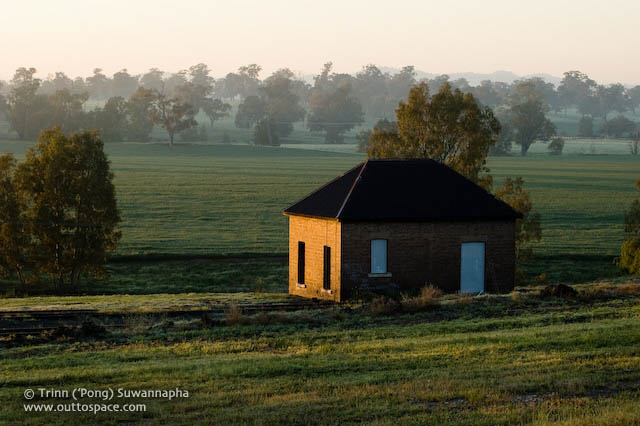
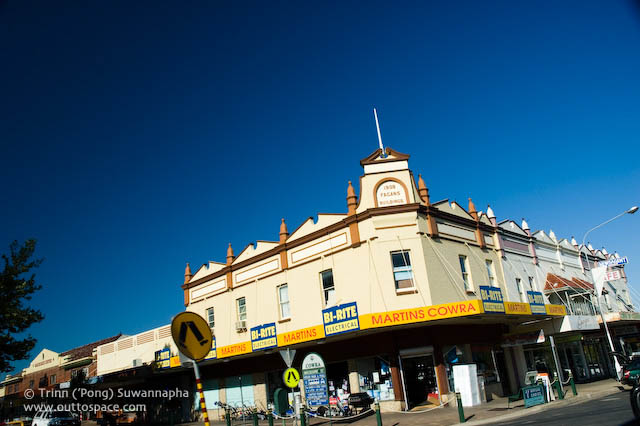
We have done the shooting for a short documentary in Cowra. This COFA class work turns out to be a very interesting project that we can look in the long term. Road trip to Cowra is beautiful in this greenish spring in New South Wales. Along the way, we see an afternoon mist covering the Blue Mountains in Katoomba, magnificent sceneries on Mount Panorama Circuit in Bathurst and a mystic twilight view on Mid Western Highway before we hit Alabaster Motel around 8.30pm.

When the morning light hit my face in the motel room, I just have to get up because window of opportunity is slim. There is a dilemma, still or video camera. I take Nikon D70, take some shot and then run back to the room to get Sony HVRZ1P. At that time Stilgherrian is getting and figuring out what I am excited about. Sunrise is a bless and it is a good day for it.

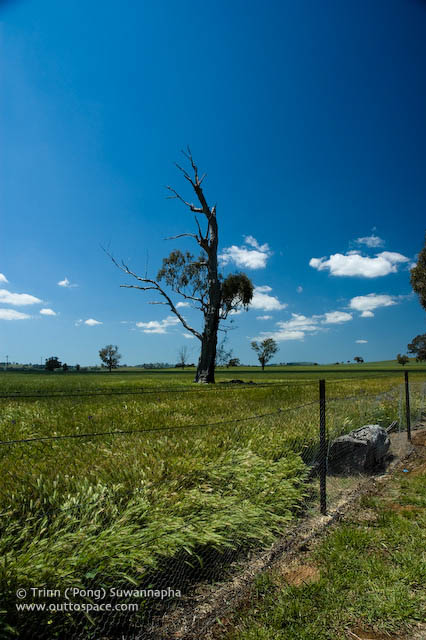
We do not have much time to explore the town, just some shots from the car on the way hunting for breakfast then we go straight to the location. The sight of vast wheat field on the roadside is rewarding. The countryside looks different when it rains. Hopefully, the long drought is over.

After the documentary shooting, we get a chance for a brief visit to Japanese Garden then the lookout and stop at Blayney Wind Farm. Unfortunately, all of that no photographs from me since I am too exhausted for and stressed about the post-production to get the work for the class presentation plus another assignment deadline which is due on the same day.

By the time, I write this blog, those class works are done.  This project lets me see how intensely I work as a producer. There are things that come back to me and things that I have to learn more. I feel coming down while having to deal other issues right away.

The Brits Are Back

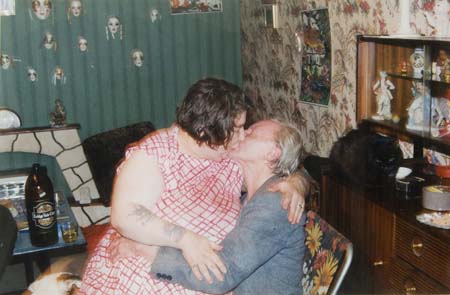
Richard Billingham's Untitled

Let’s say that in 1990’s is an era when art and creative industries in UK peaked since The Beatles and miniskirts. And Young British Artists (YBAs) was one significant group that proved that British art and culture were still alive.

It started off at Goldsmiths College, University of London, where most of YBAs went to. Michael Craig-Martin seemed to be the father figure of YBAs. He restructured the education and had a huge impact on them. Then, a group of students organised by Damian Hirst exhibited a show called Freeze, which attracted one of the most influential art collectors—Charles Saatchi with their sharp and witty art pieces. And he became the main sponsor of the group.

As Turner Prize got more buzz in British media, YBAs’ contribution to the Awards even inflamed the vibe with their bold and controversial installations like Damian Hirst’s The Physically Impossibility of Death in the Mind of Someone Living and Tracy Emin’s My Bed. The first of the group who won it in 1993 is Rachel Whiteread with House, which also won K Foundation Award. Then Damian Hirst won in 1995, Douglas Gordon in 1996, Chris Ofili in 1998, Martin Creed in 2001 and a number of nominations from several artists such as Sam Taylor-Wood, Tracy Emin, Tacita Dean and The Chapman Brothers and Garry Hume.

Sensation Exhibition in 1998 at Royal Academy was another marking point for YBAs. They became established and broke into conservative space. In fact, the exhibition was Saatchi’s collection of their works. The exhibition caused a controversy by Marcus Harvey’s Myra, which is portrait of a serial killer made by children’s handprints and provoked Catholics in New York exhibition tour with Chris Ofili’s own expression of The Holy Virgin Mary.

Damian Hirst would be the hottest artist in the group. Although he was compared to Jeff Koon, even he was far cleverer; he would rather talk art in a pub than be intellectual about his works.  His latest work, For the Love of God, was sold literally to himself. Other artists worth mentioned are Richard Billingham and Emma Kay.

YBAs group is criticised that they do not signify British class culture. Actually, they grew up in the Thatcherism era, which had systematically destroyed working class culture. And what’s wrong of being classless.

This essay is a part of Critical Response Files for Art after Postmodernism class, College of Fine Arts, University of New South Wales.

Road to Cowra

View Larger Map

We are going to Cowra, a small town in Central West of New South Wales to film a short documentary for Video Construction class work at COFA. This seems to be an over commitment for a student but I believe that the project we are working on is very significant. It is about providing an education in a remote area and how children’s learning in a constructive environment. Stay tuned for details.

Grown-up Girls or Naughty Women

The Choice Is Hers

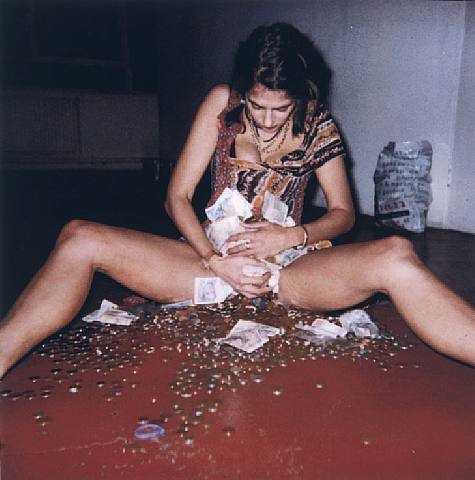
Tracy Emin's 'I've got it all'

The politics of Feminism has its own interesting journey in the past decades. From the movement of Biological Feminism to Social Construction and Post-Feminism political and social feminists, in general, seek for women’s place in the world whereas female artists find their own ways to reflect and response to the ideas of femininity.

They have come a long way since Yoko Ono’s performance “Cut Piece” (1965-2003), where she sat passively onstage while the audience cutting her cloths piece by piece, to Andrea Fraser‘s “Untitled” (2003), which she asked an art collector to pay her $20,000 then she recorded they having sex in a hotel room and released it in a limited edition.

Judy Chicago and Georgia O’Keefe are good examples who explore womanhood in forms that relate to their biological gender, tending to be soft and open than whereas guys mostly do something hard and aggressive. On the other hand, Barbara Kruger and Sophie Calle observe women’s role in social construction terms.

But when the old feminism is getting too close to far-right movement and seems to be used as a tool to control women rather than liberate them, Annie Sprinkle goes step ahead with Post Porn Manifesto. It advocates women to enjoy and embrace sex and their sexuality. Post-Feminism debates further than its predecessors that women can empower themselves and have the control of their own bodies and their own lives. Madonna is the leader in this study.

Here are some of the diverse visual artists who explore the relationship of women and the contemporary world: Tracy Emin, Sarah Lucas, Rita Ackermann, Nikki S. Lee, Cecily Brown, Kara Walker, Beatriz Milhazes, Mariko Mori, Vanessa Beecroft and Jenny Saville.

This could go along with Judith Butler‘s theory. That is your self-esteem is the echoes of something around you. The way we dress and talk responses to the feedback to you. And you reconstruct yourself all the time. You can be a different person everyday and play a game or a role with others. So women can absolutely change and choose to be who they are.

This essay is a part of Critical Response Files for Art after Postmodernism class, College of Fine Arts, University of New South Wales.

First Stilgherrian Live on the Street

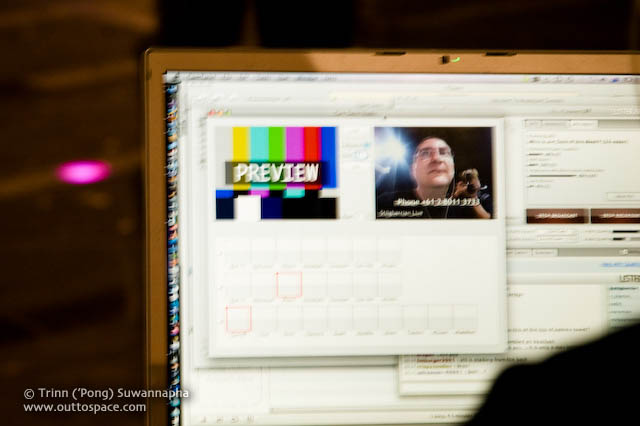
There you go I’m pimping it. Stilgherrian Live is somewhat a strange show. Last night show was a milestone as Stil decided to live from Clock Hotel, Crown Street, Surry Hills but we learnt that there was not enough light. We ended up webcasting on the street while walking up to Brighton Bar, Oxford Street, Darlinghurst. So it was fun the go along with the flow and take some shots of him while doing the program.

To be honest, these shots are the first decent photography in months that I am quite happy with.

Abjection Obsession

Paul McCarthy's Basement Bunker
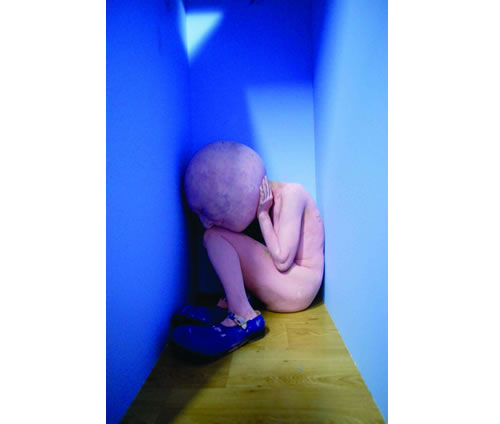
Basement Bunker by Paul McCarthy (2003)

For many contemporary artists, taboos and prohibitions are the sweetest things to explore and play with. Abjection in arts goes beyond a call for an attention. It is the reflection of ego that can be found in the traces of body.

When Andres Serrono’s Piss Christ stirred up National Endowment for the Arts (NEA) and caused artist freedom controversy, other young artists realised that they were be able to provoke and offend people, especially far right neo-evangelist. After the peak of the American dream, grunge generation realised that the promise would never be delivered since the jobs were outsourced to developing countries and the figure of young Yuppies entrepreneur became just an illusion.

The most influential concept of abjection would be Julia Kristeva’s book, Powers of Horror: An Essay on Abjection. She examined the idea that as we felt the last scum of milk, it connected mother and a child and made us aware us of our own mortality, primal moment trauma that we were not bounded and protected from mother any more. These bodily fluid and abject objects universally reminded us of it. Since then abjection became a buzzword of the artists and curators who read the book.

The most important exhibition was Helter Skelter: L.A. Art in the 1990s, which explored the darkness of Los Angeles with sex and violence. It featured the key artists such as Paul McCarthy, which strongly connected with the generation and Mike Kelly who questioned the value of family relationship.

Female artist like Kiki Smith depicts human productivity and asks whether women are stuck in that role. Orlan, a French artist, she transforms to be a perfect woman by going several cosmetic surgeries and becomes a monster herself. While male artist such as Takashi Murakami, Matthew Barney and Chapman Brother explore our estranging human bodies with fantasies and surrealism.

Some uses waste products to examine the modern world, for example, Austrian group Gelitin (Gelatin), Jessica Stockholder, Sarah Sze, Janine Antoni, John Miller, David Hammons and Tom Friedman.

It had a ripple effect on pop culture as well. Kurt and Courtney, for instance, she was a new role model against divas in those days. Alexander McQueen did the same to fashion industry by not embracing model body but irritating notion of body reception. Kate Moss was the best example of bad behaviour model. Young girls cannot be controlled now.

The aim of abjection seems to be just to shock the audience but the approaches of these artists, exploring the fragment of bodies and degraded elements, can reveal who we are and object to those stereotypical values in modern society.

This essay is a part of Critical Response Files for Art after Postmodernism class, College of Fine Arts, University of New South Wales.